Contractor Proposal Checklist: What to Include
A practical checklist for contractor proposals: scope, exclusions, pricing, schedule, payment terms and approval, with example wording you can adapt.
Published · Updated · 4 min read
Quick answer
A complete contractor proposal states who it is for and where, exactly what work is included and excluded, the price and how it is paid, when the work will happen, how changes are handled, and how to accept. Read it the way the client will: could they tell what they are buying and what happens next?
Key takeaways
- Name the client and the job address exactly, so the document matches the person paying and the place of work.
- Write scope as specific, checkable work, and list exclusions so assumptions do not become disputes.
- Show the price in a way the client can follow, with payment terms visible before they accept.
- End with one clear next step: how to approve and until when the proposal is valid.
- Keep a copy of what was approved. It is the reference if scope or price changes.
The proposal checklist
Run through this list before you send any proposal. Each item answers a question the client would otherwise have to ask you.
Before you send
- Client name and contact details
- Job address, and billing address if different
- Proposal number, date and expiry date
- A one-sentence summary of the job
- Scope of work, area by area
- Materials, products and finishes
- Exclusions and assumptions
- Price, itemized or total, and what it covers
- Payment terms and any deposit
- Schedule, or what determines it
- How changes are handled
- How to accept, and who can
Write scope that can be checked
Vague scope is where disputes start. Compare these lines for the same kinds of work.
| Vague | Checkable |
|---|---|
| Refresh the kitchen | Remove the existing backsplash (about 30 sq ft), supply and install new tile, grout and seal it. The cabinets and countertop are not included. |
| Fix the fence | Replace 12 damaged boards on the south side and finish the repaired section to match. Posts and the gate are not included. |
| Touch up as needed | One round of touch-ups within 14 days of completion, at the client’s request. |
Name quantities and surfaces where you can, and state the finish and the number of coats. When something depends on the client, such as color approval, access or moving furniture, say so in the proposal.
Say what is not included
Exclusions protect both sides. They depend on your trade, but the pattern is the same: name the things a reasonable client might assume are included.
- Work in areas that are not listed, such as the garage, attic or closets
- Repairs beyond what the scope describes, such as rot, water damage or structural problems
- Moving heavy furniture or taking down wall hangings
- Permits or inspections
- Anything found after work begins that was not visible at the walkthrough
Make price and terms easy to follow
Show how the price is built without burying the reader. An itemized price helps clients compare and lets you adjust one line if scope changes. A single total can suit smaller jobs. Put payment terms where the client reads them before accepting, and keep them consistent with the invoice you will issue later.
- Total price and what it includes
- Deposit or first payment, if you take one, and when it is due
- Progress or final payment milestones
- Accepted payment methods
- Late-payment terms, if you charge any
In Estiggle you choose how much pricing detail the client sees, from just the total to quantity, unit, unit price and total, and a live example shows the result.
End with one clear next step
A proposal should answer “What happens now?” Say how to accept, by when, and what you will do next: schedule the start, order materials or confirm colors. Before sending, read it as if you were new to the job.
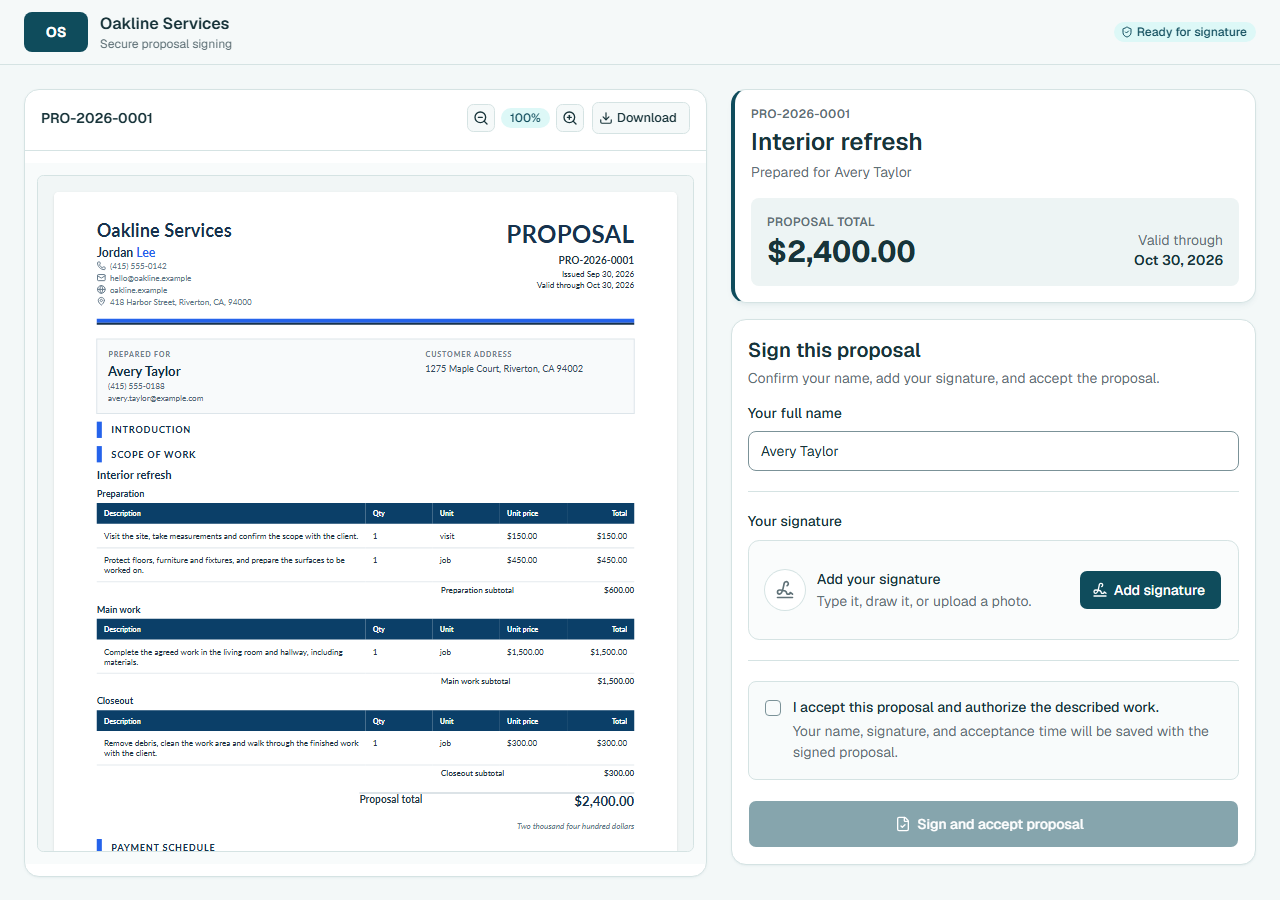
In Estiggle, the client opens a link to review the proposal and sign it, and the signed record stays with the client. How to create and send a proposal in Estiggle walks through it, and from proposal to invoice shows what comes next.
Frequently asked questions
What is the difference between a proposal and an estimate?
An estimate is an approximate price. A proposal is a detailed document written to be approved. See estimate vs. proposal vs. quote for when to send each.
How detailed should the scope of work be?
Detailed enough that a stranger could check, after the job, whether each item was done. Name areas, surfaces, quantities, products and finish where they matter.
Should a proposal include a deposit?
Many contractors ask for one, but it is a business and legal choice. Rules on deposits for home-improvement work vary by state, so check with your licensing board before you set one.
How long should a proposal be valid?
Choose a window that matches how long your prices hold and state it on the proposal. Material and labor costs change, so an expiry date protects you.
Should I include photos in a proposal?
Where they clarify the scope, yes. Photos of the areas to be worked on help both sides agree on the starting condition. In Estiggle you can attach reference photos to a proposal.